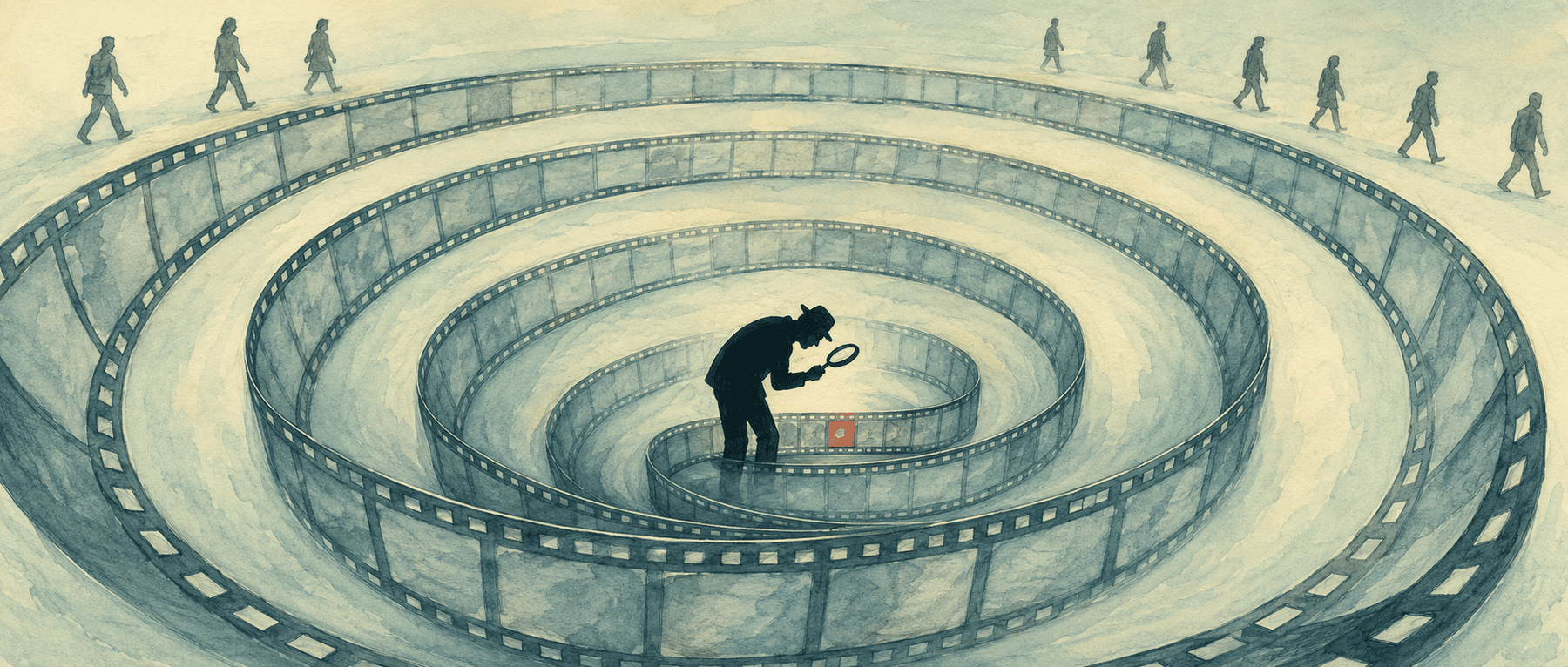
Nolan’s Odyssey is out. Universal opened ticket sales a full year ahead, the seats vanished, and resale prices ran past a thousand dollars. And not for a normal screening — for the version only about forty-one theaters in the world can project.
The marketing line never wavers: the first feature in history shot entirely on IMAX 70mm film.
Just under three hours of finished picture. Splice the negative end to end and it runs more than six hundred kilometers. The camera weighs a hundred and eighty kilos, and each magazine holds three minutes. What Nolan wants is the thing he keeps describing — a screen so large the frame disappears and the image fills your peripheral vision. Nothing in your house reproduces it.
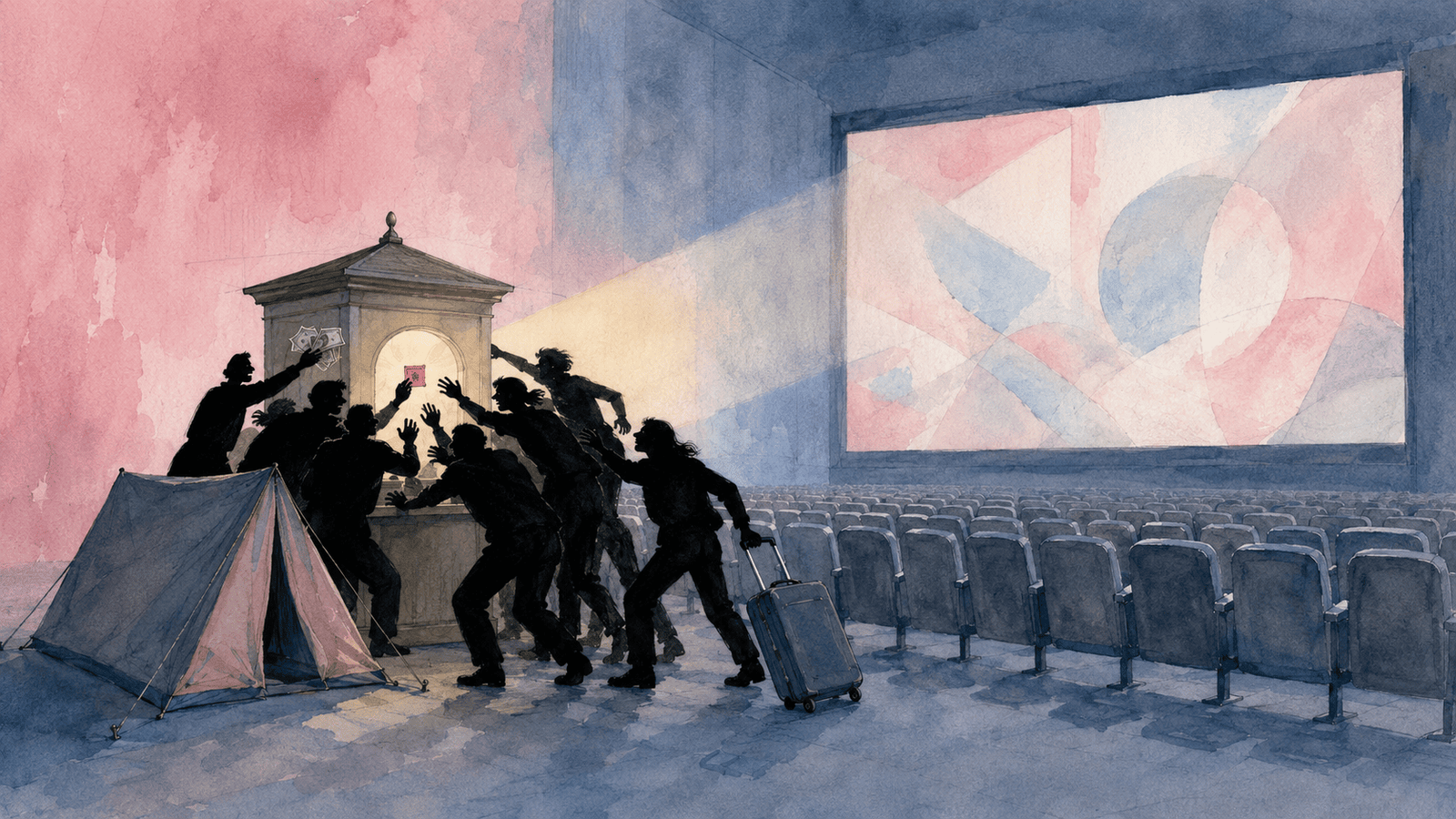
Then the campaign plays one more card. What you see in an ordinary auditorium is a lot less than what Nolan actually shot: the full version is nearly square, and a normal screen slices off the top and bottom and hands you a thin strip of the middle.
Translated, that’s one sentence. You have to be in the right theater, watching the right way, before you get to say you’ve seen this movie.
Behind the Genius, an Obsessive
I like Nolan enormously. He’s one of the few genuine talents working, and to him film and digital aren’t two settings of the same thing — they’re different in kind. The grain, the way the tones stack, most of the audience will never register any of it, and he catches it instantly. That’s exactly what makes him good. Only a first-rate maker has eyes that fine. The discrimination is part of why he’s Nolan.
Which is why it’s worth pressing the question: are the differences he sees actually the movie?

Picture two people. One is sitting in a regular auditorium, crying at Odysseus coming home. The other got a 70mm ticket and spends the whole running time reading the grain. The first missed the screen and walked out with the thing the film was made to give. The second got a perfect format and isn’t necessarily one inch closer to the story.
Noticing fine differences is what expertise looks like. It doesn’t follow that every difference matters to the person in the seat.
The layer Nolan fell in love with might be the least cinematic layer in the movie.
The Vortex Only Catches the Best
There’s something here worth naming on its own. I call it the technique vortex.
The counterintuitive part: nobody falls in for lack of skill. It takes the very best.
The entrance to the vortex is the talent itself. You see one layer more than everyone else, so you have one more door to walk into. The eye that made your name and the hand pulling you under are the same one. That’s why masters can’t dodge it — you can’t keep the perception nobody else has and pretend at the same time that you can’t see it.
This isn’t Nolan’s first time, either.
Tenet was the narrative edition of the same problem. He braided time forward and backward into a single strand, and wound it to a tightness only the director could follow. The audience couldn’t make out the dialogue, couldn’t hold the plot, and came out remembering “that was mind-bending” instead of “that was good.” The time structure is the kind of thing only the maker cares about, and the story got twisted apart to serve it. The film-stock exclusivity now and the reversed narrative then are the same director with the same condition, breaking out in a new place: once in the storytelling, once in the medium.
Directors have no monopoly on this. Every craft grows its own version.
Interface designers will chase a single pixel, a grid, a set of letter-spacing values to the last decimal. Nothing wrong with that; it’s the basic work. But the moment a designer decides that’s where all the beauty of the job lives — and starts sneering at people who don’t see it, you don’t understand design — he’s already in the vortex. The details he’s guarding aren’t what design means to the person using the thing. That person knows one thing: is this good to use, and do I want to open it again.
Audiophiles are Nolan’s closest relatives here. Five figures on cabling, arguments about vinyl being warmer and more human than digital, ears that really can hear the trace of digital hardness nobody else hears. Their ears are good. The difference is real. But nearly everyone who plays a song wants to know whether it got them, not whether the chain reproduced 99.99 percent of it. The audiophile is guarding fidelity. The listener came for the song. Which is very nearly the same sentence as Nolan guarding the stock while the audience came for the story.
Programmers don’t escape either: elegant architecture, clean abstractions, layer wrapped in layer, until software that existed to solve a problem has turned into an object its author admires. Users want it to work and to be pleasant to use. He wants the code to be beautiful.

Line them up and one shape shows through. Everything they’re defending is real, and all of it is process, not the thing itself. The film serves the story. The grid serves the reading. The cable serves the song. Put the means on an altar and you’re in the vortex.
So where’s the line? I think there’s only one.
Inside the small circle, go as far as you like. A room of audiophiles comparing cable, a room of directors talking emulsion chemistry — that’s the pleasure of the trade, and nobody else’s business. But if the thing you make is for everyone, and you turn around and ask everyone to learn to appreciate one technical step in your production process — to pay up for your grain structure, to accept that they haven’t really seen it unless they saw 70mm — that’s where it gets absurd.
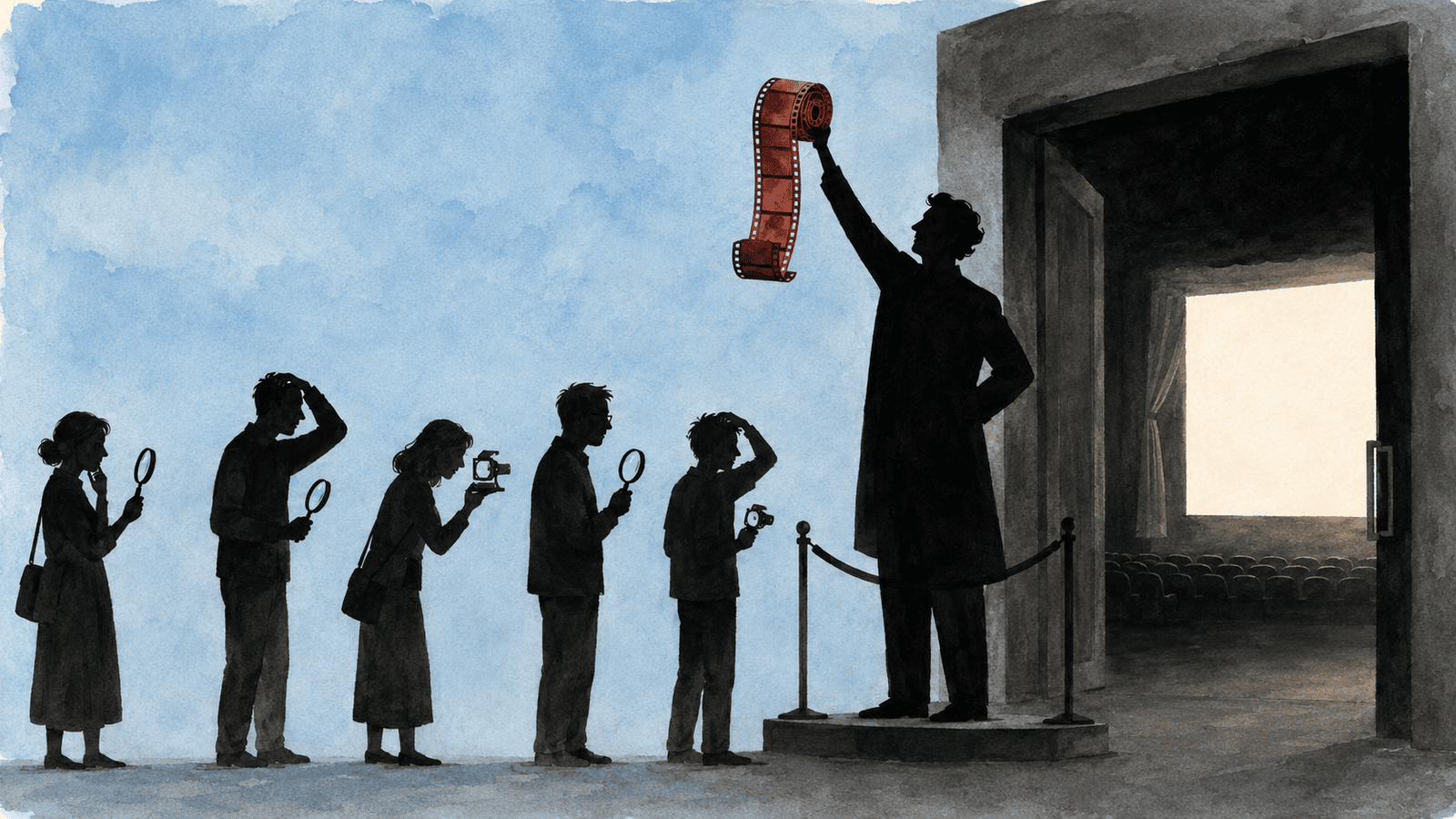
Movies are made for the public, and the owner of a movie is the person who came for the story. Ask that owner to pass an exam in film-craft appreciation before entering, and you’ve reversed who’s serving whom.
What a Movie Is Actually For
Back to the dumbest available question. Why does a movie exist?
So that a story reaches one person and leaves something behind. The technology — film, IMAX, the cut, the color — is all means to that end. However beautifully you build the road, the road doesn’t get to become the destination.
The hardest work for any maker isn’t pushing the craft further. It’s remembering who the craft is for.
The balance was never about using less technology. Nolan should shoot 70mm when 70mm is right. But is the technology helping the audience watch, or has it turned into the director watching himself? That’s a fair question to ask. If it’s the second one, IMAX becomes a threshold, a room only insiders are allowed into. Same machine, same gift; the split is one decision wide.
What makes a master valuable is seeing what nobody else sees. What keeps a master sane is knowing which of those details to keep for himself, and which ones not to force on everyone else.
If It Moved You, You Saw It
The Odyssey is probably still a good movie, and Nolan is still Nolan.
But while everyone is arguing about which theater and which format, it’s worth stopping and going back to the dumb question:
Did the story move you?
If the answer is yes, you’ve seen it. Which auditorium you sat in, and whether it was 70mm, doesn’t matter.
The part that actually matters was never inside the projector. It’s out past the screen — in the person holding their breath for Odysseus getting home.